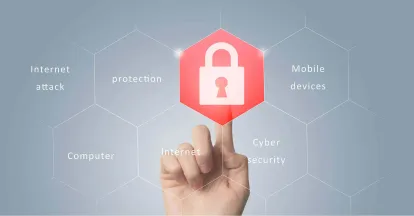
On average, we spend 2 hours a day on the internet. Of course, some people use the web for most of the day, and others not at all—but either way, the internet is our virtual, parallel world. In our real environment, we protect our privacy with window blinds, and we guard against break-ins with door locks and/or alarms. We tend to think we’re safe online—nothing could be further from the truth.
Strong, varied passwords are essential so no one can break into your bank account or computer drive. Every door has a different key, so your passwords should be different too.
Watch out for suspicious sites, easy-money schemes, and viruses on social media. Use common sense when sharing personal data or card numbers, and never, ever give anyone your passwords. The exception is internal company exchanges, where breaching confidentiality laws carries severe penalties.
Scan your drive, buy antivirus software, and run regular updates.
If you unplug your computer, that doesn’t mean you’re safe. Your data is still out there on the web and can be used against you at any moment.
Make sure it stays secure.
Your phone has long been used for dozens of things other than calling and voice conversations. It’s a tempting target for hackers and viruses. Few people protect their smartphones. We also often sign up for various apps with a Google or Facebook account—and sometimes have a hundred tools linked to one shared account. If we lose our Google or Facebook account for any reason, we lose access to those 100 apps too, even paid ones.
Remember—change your passwords for your computer, email, social media profiles, and bank account (you may need to visit a branch). Keep a constant eye on your data.